This simple hands-on blubber experiment shows kids how Polar animals survive freezing temperatures.
Category: Polar animals
You’ll Need:
A large bowl filled with ice and cold water
Vegetable shortening (you can substitute with ghee or butter)
Paper towels or wipes for easy cleanup
Let’s Make it:
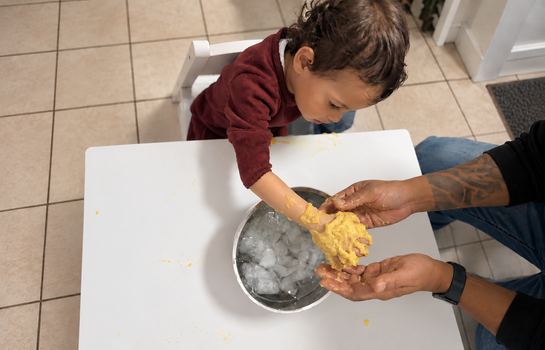
Have your child gently dip their hand into the icy water for a few seconds and talk about it: “Wow — that feels really cold”.
Spread shortening all over the same hand so it’s covered in a thick layer — this becomes the pretend blubber.
Dip the “blubber hand” back into the icy water and discover that it doesn’t feel as cold now. That protective layer works just like the fat under a polar animal’s skin.
Did you know?
Polar bears, seals and whales have a thick layer of fat called blubber that helps keep them warm in freezing temperatures.
Blubber acts like insulation, slowing down the loss of body heat — just like a cozy winter jacket.
Some whales have blubber that is more than 30 cm (12 inches) thick. Imagine wearing a jacket that thick.
Blubber also stores energy, helping animals survive when food is hard to find.
Why We Love It:
Kids don’t just hear the science — they actually experience it.
Builds curiosity and encourages lots of “Why?” questions.
Sensory-rich, squishy and totally memorable.
A gentle intro to learning about habitats and adaptation.