Let’s turn science into fun. Your kid will love testing everyday objects to see which ones float and which ones sink—it’s simple, hands-on learning that feels like playtime.
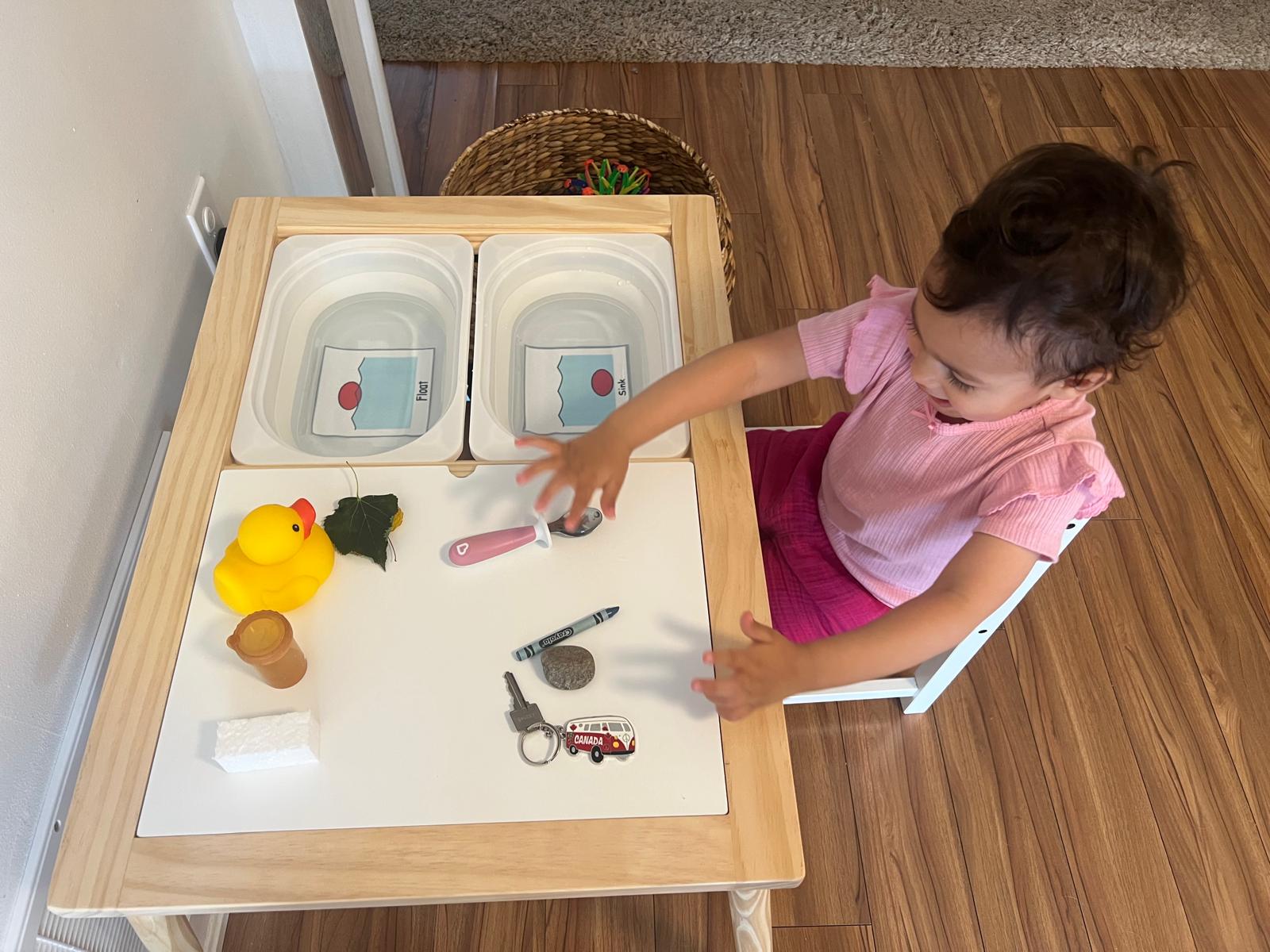
Things that Float: › Plastic spoon › Sponge › Rubber duck › Ping pong ball › Empty plastic bottle (with cap on) › Cork › Pool noodle slice › Foam letters or numbers
Things that Sink: › Metal spoon › Small rock › Big coin › Key › Marbles › Crayon › Grape or cherry tomato
Let’s Make it:
Fill two bins or bowls with water—label one “Float” and one “Sink.”
Gather your mix of objects and invite your child to make predictions: Will it float or sink?
Drop each object into the water and watch what happens. Sort them into the correct bin and talk about why.
What’s Happening Here?
Density is a science word that tells us how heavy or light something is for its size.
If an object is light for its size, it means there’s lots of air or empty space inside—like a sponge or a rubber duck. That’s why it floats, because the water can easily hold it up.
But if something is heavy for its size, like a rock or a metal key, it’s packed really tightly with no space for air. That’s why it sinks—the water just can’t hold it up.
Why We Love It:
Turns simple water play into a hands-on science experiment.
Builds observation, prediction and reasoning skills through exploration.
Encourages curiosity and conversations about why some things float while others sink.